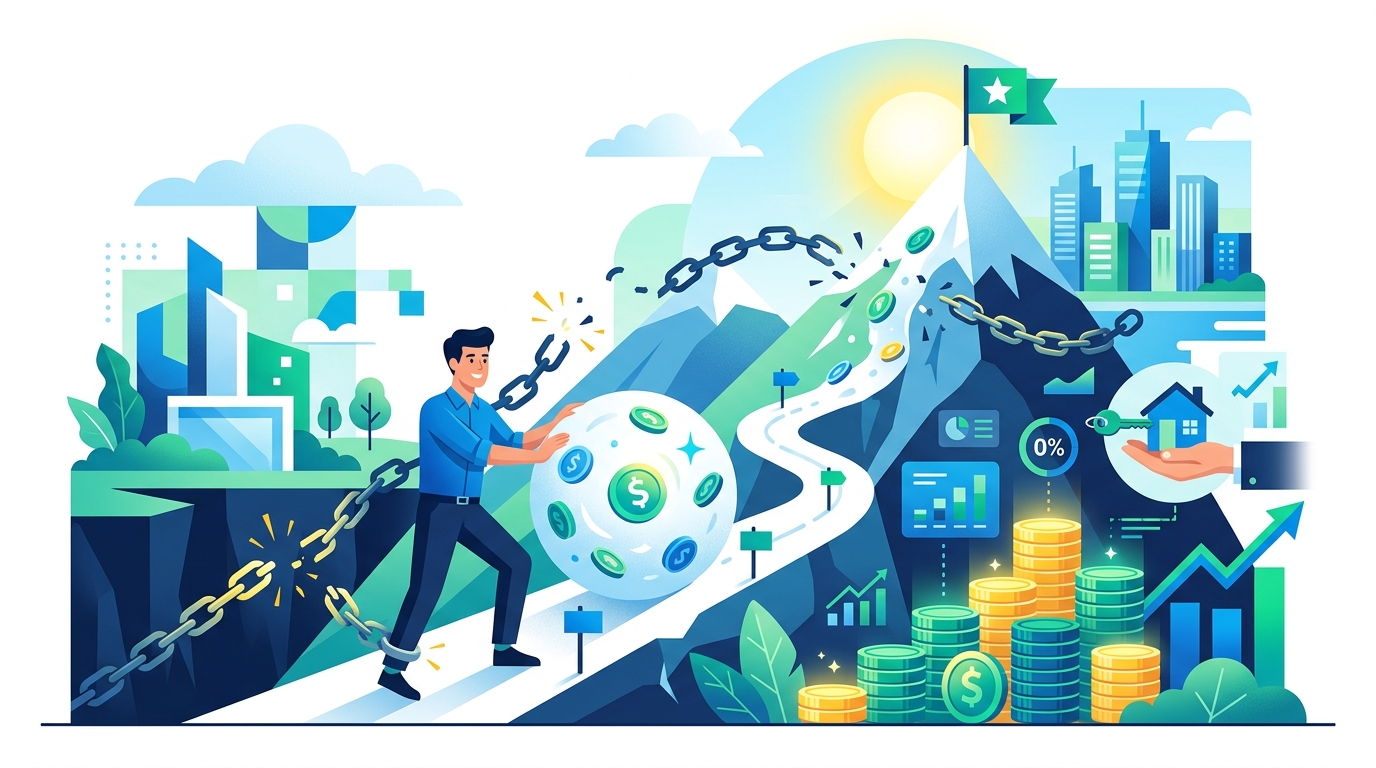
Carrying debt can feel like a heavy weight, but the right payoff strategy can turn that burden into a manageable plan. The best approach depends on your total debt, your income, and your personal motivation. Whether you owe a little or a lot, there’s a path forward. This guide walks you through every major debt-payoff method, from DIY tactics to consolidation and relief options. We’ll also help you decide which route fits your situation: and our improved debt-payoff calculator (below) gives you a clear, visual comparison of your choices.
Step 1: Calculate Your Debt Load
Before choosing a strategy, know where you stand. Compare your total monthly debt payments (excluding mortgage) to your gross annual income. A common benchmark:
- < 36% of gross income: DIY methods (snowball/avalanche) are usually sufficient.
- 36%: 50%: Consolidation may simplify payments and save interest.
- > 50%: Consider professional debt relief (management, settlement, or bankruptcy).
Our interactive debt-to-income calculator (below) does the math instantly and recommends the best category for you.
Step 2: Choose Your Payoff Method
A. Smaller Debt Loads: DIY Strategies
If your debt is manageable (under 36% of income), you can handle it yourself without new loans or outside help. Two proven approaches:
Debt Snowball (Motivation-Focused)
- Pay off your smallest balance first, regardless of interest rate.
- Make minimum payments on all other debts, and throw every extra dollar at the smallest debt.
- Once it’s gone, roll that payment into the next smallest balance: like a snowball growing larger.
Best for: People who need quick wins to stay motivated.
Debt Avalanche (Money-Saving Focused)
- Pay off the debt with the highest interest rate first.
- Continue minimums on others; after the highest-rate debt is cleared, move to the next highest.
- This saves the most money and time mathematically.
Best for: Those who can stay patient and want the lowest total cost.
Which is better? Snowball keeps you engaged; avalanche saves more money. If you’re disciplined, avalanche is superior: but the best method is the one you’ll stick with.
B. Larger or High-Interest Debt Loads: Consolidation
When you have multiple high-interest debts (e.g., credit cards), consolidation can streamline your life and cut costs.
Balance Transfer Credit Cards
- Move existing credit card balances to a new card with a 0% introductory APR (often 15-21 months).
- During that period, every payment goes toward principal: no interest.
- Requires good/excellent credit (typically mid-600s or higher).
- Watch out for transfer fees (usually 3-5%) and ensure you can pay off the balance before the promo rate expires.
Debt Consolidation Loans
- A fixed-rate personal loan used to pay off all your debts at once.
- You then repay the loan in fixed monthly installments over 1-7 years.
- Rates range from ~7% to 36% depending on credit.
- Ideal if you can secure a rate lower than your current average APR.
- Available even with fair credit, though rates may be higher.
Consolidation works best when you avoid running up new debt on the paid-off cards.
C. Overwhelming Debt: Relief Options
If your unsecured debt (credit cards, medical, personal loans) exceeds 50% of your gross income or would take more than 5 years to pay off, explore these:
Debt Management Plan (DMP)
- Offered by non-profit credit counseling agencies.
- They negotiate lower interest rates with your creditors and combine payments into one monthly amount.
- Fees are modest (start-up + monthly), and no credit score minimum.
- Repayment typically takes 3-5 years.
Debt Settlement
- Negotiate with creditors to accept less than the full balance: either on your own or through a settlement company.
- This can reduce total debt but will hurt your credit score significantly (because you’re paying less than owed).
- Usually a last resort before bankruptcy.
Bankruptcy
- Chapter 7 liquidates most unsecured debts; Chapter 13 creates a court-approved repayment plan over 3-5 years.
- Both severely damage credit and stay on your report for 7-10 years.
- Consult a bankruptcy attorney before taking this step: it’s a legal decision with long-term consequences.
Step 3: Free Up More Money for Payments
Whichever strategy you pick, you need cash flow. Try these:
- Stick to a budget: The 50/30/20 rule (needs/wants/savings+debt) is a great starting point. Use budgeting apps to track every dollar.
- Negotiate bills: Call service providers (phone, insurance, cable) to lower rates or switch to cheaper plans.
- Side hustle: Drive for rideshare, freelance, sell unused items, or even ask for a raise at your current job.
Every extra $50 or $100 per month can shave months off your repayment timeline.
Improved Debt-Payoff Calculator
Our calculator goes beyond a simple ratio. It compares the snowball vs. avalanche side-by-side, shows total interest, payoff time, and even suggests whether consolidation could help.
- Side-by-side comparison: You see both methods at once, not just one.
- Extra payment slider: Quickly see how additional monthly contributions shorten your timeline.
- Debt-to-income gauge: Instant recommendation based on a widely used threshold.
- Visual bar chart: At a glance, compare the payoff duration of each strategy.
Final Thoughts
Paying off debt is a journey, not a sprint. Choose a method that fits your financial reality and your personality. Use our calculator to run different scenarios – it’s designed to give you confidence in your plan.
If you have questions or need personalized advice, reach out to a certified credit counselor. For more tools and resources, explore usbankdata.org.
Disclaimer: This content is for informational purposes only and does not constitute financial advice. Always consult a qualified professional for your specific situation.